
This is general information and does not replace confirmation with the competent authority or legal advice.
What's yours and what's shared
In a Portuguese apartment building there are two kinds of space:
- Your unit (fração): the inside of the flat and, generally, exclusive use of the balconies and terraces assigned to it.
- Common parts (partes comuns): the structure, load-bearing walls, roof, façades, light wells and circulation areas, among others defined by law and by the building's founding deed (título constitutivo).
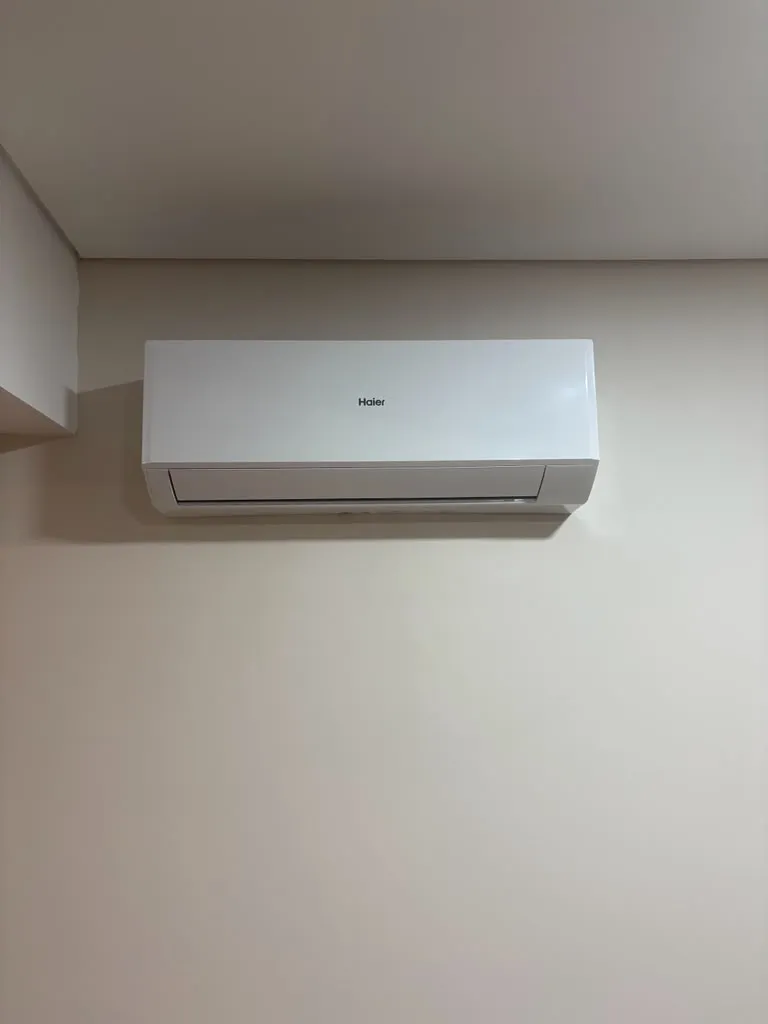
The indoor unit sits inside your flat. The outdoor unit, the pipework and the hole through the wall often touch common parts or the look of the building. That's where the rules come in.
What the law says
The Portuguese Civil Code limits what each owner can do, even inside their own unit. One of those limits is a ban on works that harm the building's architectural line or aesthetic appearance. Works that change that line or appearance can go ahead if the owners' general meeting (assembleia de condóminos) authorises them in advance, by the qualified majority the law requires.
In practice, an outdoor unit clearly visible on the main façade may need the meeting's approval, while a discreet unit on a rear balcony or in a light well may not affect the architectural line at all. It depends on each case and, when in doubt, should be checked with the building's management (administração do condomínio) or a lawyer.
The condominium regulations
Many buildings have their own regulations (regulamento do condomínio), and more and more include specific rules on air conditioning:
- where outdoor units may go (balconies, roof, plant room);
- whether pipe trunking must match the façade colour;
- how condensate water must be drained;
- whether you must ask management before installing.
Before buying the unit, ask the management for the regulations. In newer buildings there's often a designated plant area for outdoor units, and sometimes pre-installation already in place.
Municipal rules and protected areas
In some cities, and especially in historic districts, municipal rules limit equipment on façades visible from the street. Listed buildings or protected zones have stricter requirements. In Lisbon's older neighbourhoods, the practical rule is to avoid the main façade and look to the light well, back courtyard, roof or a rear balcony.
Noise
The outdoor unit makes noise and transmits vibration. Portuguese noise regulations set limits on disturbance to neighbours, and a poorly installed unit can lead to complaints. To avoid problems:
- choose a spot away from neighbours' bedroom windows;
- use anti-vibration mounts and don't fix the unit to walls that carry vibration indoors;
- choose a model with a low outdoor noise level;
- don't install it inside an enclosed balcony (marquise): it performs badly and the noise is amplified.
Balcony, light well, roof or façade: pros and cons
| Location | Advantages | Watch out for |
|---|---|---|
| Your own balcony | Easy access for maintenance; usually doesn't change the main façade | Takes balcony space; noise near your and your neighbours' windows |
| Light well (saguão) | Discreet, out of sight from the street | Poor ventilation in narrow wells; noise echoes between walls; maintenance access |
| Roof | Keeps the façade clear; good ventilation | A common part: needs authorisation; longer pipe runs; maintenance access |
| Façade | Sometimes the only technical option | Most subject to condominium and municipal rules; visual impact |
| Designated plant area | Planned at construction, no conflicts | Check the existing pre-installation is in good condition |
The best option is almost always the one that combines discretion, ventilation and access for maintenance.
Condensate: the number one cause of disputes
When it cools, an air conditioner produces water. That water must go to a drain, downpipe or sewer, never dripping onto the balcony below or the pavement. It's by far the most common complaint between neighbours. Condensate drainage should be sorted at installation. If yours drips, see air conditioner problems.
If you rent
Air conditioning means drilling and an outdoor unit, so it changes the property. You need the landlord's permission, ideally in writing, and you should agree what happens to the equipment when the lease ends. Condominium rules apply either way.
If you're buying
When viewing a flat you plan to buy, it's worth asking a few questions early: does the building have a designated area or pre-installation for air conditioning? Do the condominium regulations restrict outdoor units? Are there existing units, and were they authorised? The answers can save you surprises after the deed.
Step by step to install without problems
- Ask management for the regulations.
- Identify possible locations for the outdoor unit: balcony, light well, roof, plant area.
- If the location affects the façade or common parts, ask management for authorisation, which may take the matter to the owners' meeting.
- Consider a multi-split if you want several rooms: one outdoor unit instead of several.
- Agree condensate drainage before installation.
- Choose a quiet unit and an installation with anti-vibration mounts.
- Keep the authorisation and the installation invoice.
How we help
On the technical visit we assess possible locations for the outdoor unit, the pipe route and condensate drainage, and explain the most discreet options. If the building has rules, we follow them; if you need to put a proposal to management, we give you a technical description of the installation. We speak English, and can explain the options to you before you approach the condominium. See air conditioning installation and, for building managers, condominiums.
Frequently asked questions
Not always. It depends on the regulations and on whether the installation affects the architectural line, the façade or common parts. When in doubt, ask management before installing.
If the installation breaks the law or the regulations, the condominium can demand that things be put back as they were. That's why it's worth checking first.
The roof is, as a rule, a common part. You need the condominium's authorisation.
Even better: the outdoor unit's location was planned at construction. We check the pipework and install.
Switch the unit off and have the condensate drain checked. It's usually blocked, disconnected or badly routed, and is fixed in one visit.
If the installation needs authorisation, it's not a good idea. A unit installed without authorisation may have to be removed, with the cost of reinstalling it elsewhere. Meanwhile, you can choose the equipment and book the technical visit.
The rules are the same: what matters is where the outdoor unit goes. But a single outdoor unit reduces the impact on the façade and the noise, which usually makes the conversation with management easier.