
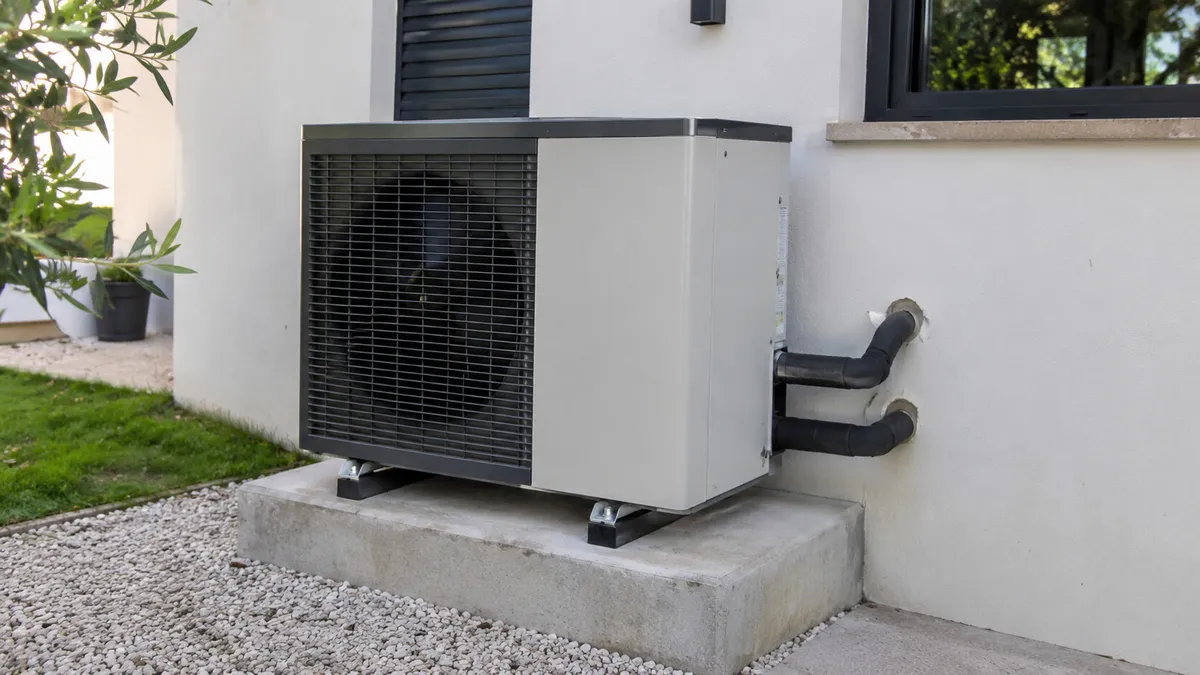
We install and repair air-to-water heat pumps in villas and apartments across Greater Lisbon, the South Bank and the Setúbal district: for hot water, for heating, or both.
Three uses, three solutions
| What you want | Solution | How it's installed |
|---|---|---|
| Hot water only (showers, kitchen) | Heat pump water heater with a built-in 200 or 300 litre tank | One compact unit in a utility room, laundry or garage, in place of the old water heater |
| Heating only | Air-to-water heat pump connected to radiators or underfloor heating | Outdoor unit plus connection to the heating circuit |
| Hot water and heating | Air-to-water heat pump with a separate or integrated hot water cylinder | Outdoor unit plus an indoor hydraulic module or cylinder |
A heat pump water heater is the easiest place to start: it replaces the old appliance directly. To compare, read heat pump vs water heater.
Monobloc or split
Air-to-water heat pumps come in two configurations:
- Monobloc: the whole refrigerant circuit stays inside the outdoor unit. Only water runs between the outdoor unit and the house. Simpler to install, no refrigerant handling on site.
- Split (bibloc): an outdoor unit and an indoor module joined by refrigerant pipework. The water side stays indoors, protected from frost. Requires an F-gas certified technician, which ours are.
The right choice depends on space, the distance between the outdoor unit and the cylinder, and exposure. We explain the options during the technical visit.
Sizing it properly
An undersized heat pump runs out of hot water; an oversized one costs more than it should. We size it using:
- The number of people and their habits: long showers, a bath, appliances connected to hot water
- Bathrooms used at the same time
- The area to heat, the insulation and the emitters, if the heat pump also heats the house
- Space for the cylinder and the outdoor unit
As a rule of thumb for hot water, a 200 litre tank suits most households of 2 to 4 people and a 300 litre tank larger families or higher use. The visit confirms it.
Heat pumps for central heating
A heat pump is most efficient when it heats water to moderate temperatures. That's why it pairs so well with underfloor heating, which runs on warm rather than hot water. It also works with radiators: often an old boiler can be replaced while keeping existing radiators, after checking they have enough output at heat pump temperatures. See how we build the full system on central heating.
Isn't air conditioning a heat pump too?
In principle, yes. A heat-and-cool air conditioner is an air-to-air heat pump: it heats the air in the room directly. An air-to-water heat pump heats water, which then flows through radiators, underfloor heating or a hot water cylinder. Read air conditioning vs heat pump to decide.
Where the outdoor unit goes
The outdoor unit needs air moving around it, so it can't be boxed into a tight niche. Common spots are the garden, a balcony or terrace, the roof or a wall bracket. We choose the location for airflow, noise (for you and the neighbours) and service access. The defrost water the unit releases in winter also needs somewhere to drain.
Installation, servicing and repair
An installation includes:
- Choosing the outdoor unit location and the cylinder location
- Water and electrical connections, with a dedicated circuit in the fuse board
- Filling, bleeding and checking the circuit
- Setting up the controls and showing you how it works
On a service visit we check filters, pressures, the cylinder's anode where applicable, the outdoor coil and overall operation. On repairs, we always diagnose first and give you the price before repairing.
Heat pumps in holiday homes
For homes used only part of the year, a heat pump water heater with a holiday mode keeps the tank protected while you're away and brings hot water back up before you arrive.
Frequently asked questions
Yes. Modern heat pumps work below freezing. Efficiency drops when the outside air is very cold, but in the Lisbon and Setúbal climate they perform well all year round.
Yes, it's the most common swap. A heat pump water heater takes up similar space to a large water heater and connects to the same pipes. It needs a space with enough air volume or a duct to the outside.
The outdoor unit has a fan and compressor, so it makes some noise. We choose the location to minimise it for you and your neighbours.
Support schemes in Portugal change often and have their own rules. Always check the Fundo Ambiental website before deciding. This is general information and does not replace confirmation with the competent authority or legal advice.
We work with several brands and help you choose the right unit for your home and budget.
In a garden, on a terrace or on a wall bracket, with free air around it and away from bedroom windows. With split systems, the indoor part goes in a laundry, garage or utility room. We choose the spot with you on the visit.