
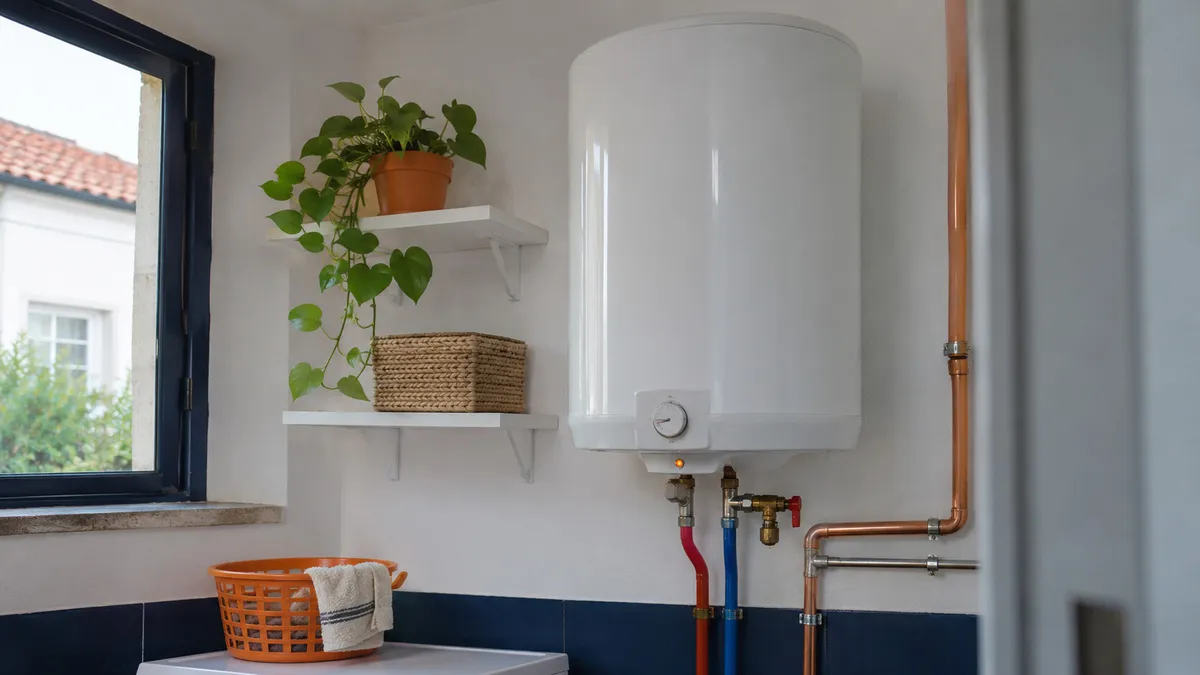
We install, replace and repair electric water heaters in homes across Greater Lisbon, the South Bank and the Setúbal district. We help you choose the right size and handle the complete job, including the electrical connection.
Choosing the right tank size
Capacity is the most important decision. Too small and hot water runs out; too large and you pay to keep water hot that you never use. As a rough guide:
| People at home | Bathrooms | Suggested capacity |
|---|---|---|
| 1 | 1 | 30 to 50 litres |
| 2 | 1 | 50 to 80 litres |
| 3 to 4 | 1 to 2 | 80 to 100 litres |
| 4 to 5 | 2 | 100 to 150 litres |
| 5 or more | 2 or more | 150 to 200 litres |
Habits count as much as headcount: back-to-back morning showers, a bath, a rain shower or appliances on the hot supply all need more capacity. Holiday rentals with full occupancy often need a size up. We fine-tune it during the visit.
Vertical, horizontal or slim
- Vertical: the most common and most efficient shape, because hot water naturally stays at the top, separate from the cold. Needs height.
- Horizontal: for false ceilings, above cupboards or low spaces. Less height, but less separation between hot and cold water.
- Slim or flat: for narrow niches with little depth.
The available space often decides the shape. We measure before you buy.
A proper installation
- Wall fixing with brackets rated for the weight of the full tank. A 100 litre heater full of water weighs well over 100 kg.
- Water connections for cold inlet and hot outlet.
- Safety valve on the inlet, mandatory, with its discharge piped to the drain.
- Electrical connection with the right circuit and protection in the fuse board. We are also electricians, so we handle this in the same visit.
- Filling, bleeding and testing before switching on. Powering an empty heater burns out the element.
When replacing, we disconnect and remove the old unit.
Signs your water heater is at the end of its life
| Sign | What it usually means |
|---|---|
| Brown or smelly water | Internal corrosion; the protective anode may be used up |
| Water on the floor under the tank | A leak in the tank: as a rule, time to replace |
| Slow to heat or not heating | Element or thermostat failure, or heavy scale |
| Popping or crackling while heating | Scale build-up at the bottom |
| Safety valve constantly dripping | High mains pressure or a faulty valve |
| Breaker trips | Faulty element or electrical connection |
Many of these are repairable: we replace elements, thermostats and valves. When the tank leaks or is badly corroded, replacing makes more sense, and we'll tell you honestly which it is.
Water heater or heat pump
If you're replacing your water heater, consider a heat pump water heater. It does the same job in a similar footprint but uses much less electricity to heat the same water. It pays off especially in larger households and rentals with high hot water use. We install both and help you compare: read heat pump vs water heater.
Where to install it
- Close to the main taps (bathroom and kitchen): shorter pipe runs, less cold water wasted waiting for hot.
- On a wall that can take the weight.
- With access to the anode, element and safety valve.
- Out of the shower splash zone and away from heat sources.
In small bathrooms, a horizontal model above a false ceiling or a slim model in a niche solves a lot of cases.
Maintenance that extends its life
- Check the magnesium anode periodically and replace it when worn. It protects the tank from corrosion.
- Descale in hard water areas.
- Test the safety valve briefly from time to time.
- Set a sensible temperature: very hot water costs more and speeds up scale.
Holiday rentals and back-to-back guests
In a rental, the water heater has to recover between check-out and check-in, and cope with a full house showering in the morning. That usually means one size up from what the same family would need at home, or a heat pump water heater, which reheats efficiently. We size it for your real occupancy.
Frequently asked questions
It depends on capacity and shape, whether it's a replacement or a new install, and the condition of the connections. We quote equipment and installation after the visit.
Yes. Send us a photo of the space and the current installation on WhatsApp before buying, and we'll confirm the model fits.
It's one of the most common causes, but it could also be the thermostat, the safety cut-out or the power supply. We diagnose before replacing parts.
At the moment we work with electric water heaters and heat pump water heaters.
It depends on water quality, anode maintenance and use. With regular anode checks it lasts considerably longer; without them, corrosion and scale shorten its life.
A vertical heater is the usual choice and keeps hot water slightly better. Horizontal or slim models are for false ceilings, narrow niches or above doors, where a vertical one won't fit.