
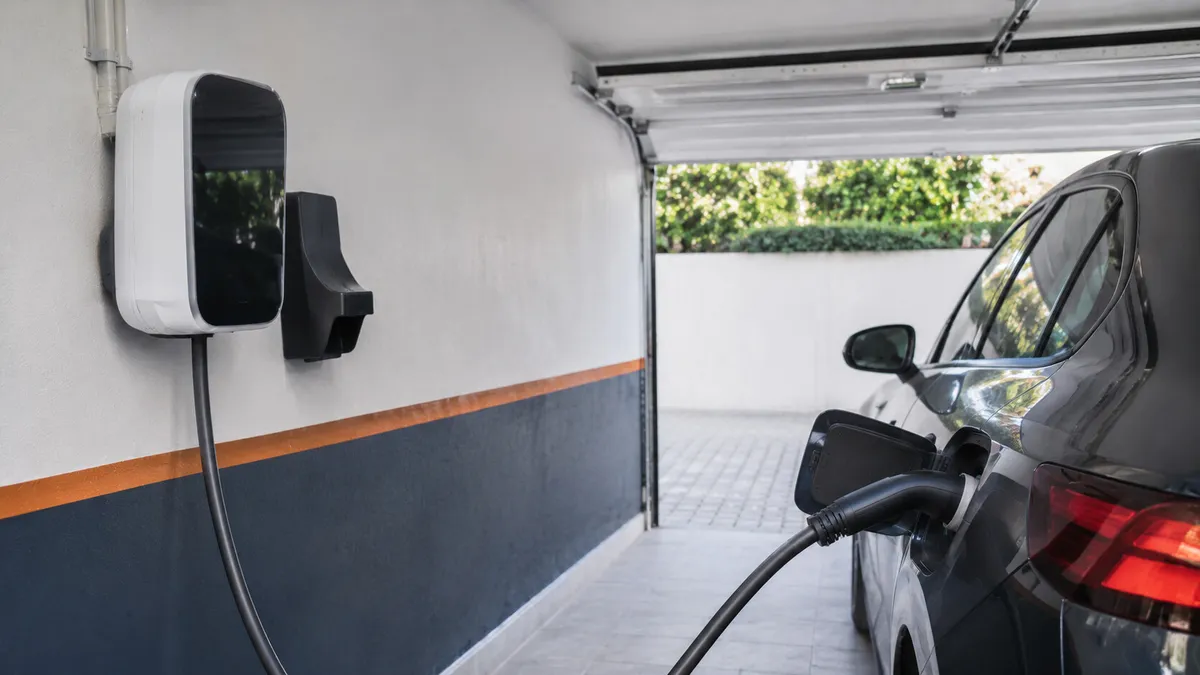
We install wallboxes and home EV chargers in villas, private garages and apartment building car parks in Lisbon, Cascais, Sintra, Almada, Seixal, Setúbal and the surrounding areas. Installation is carried out by a certified technician who speaks English.
Single-phase or three-phase: how fast can you charge
Charging speed depends on three things: the wallbox's power, your home's supply and the car's on-board charger. The slowest of the three sets the pace.
| Supply | Typical wallbox power | Who it suits |
|---|---|---|
| Single-phase | Up to 7.4 kW | Most homes and apartments; recharges overnight |
| Three-phase | 11 kW | Homes with three-phase supply and cars that accept 11 kW AC |
| Three-phase | 22 kW | Few cars can use it; useful for businesses or several vehicles |
A 22 kW wallbox won't charge any faster if your car only accepts 7.4 kW. Before choosing, we check what your car accepts and what your supply allows.
What we check before installing
- Contracted power. In Portugal, homes have a contracted power level with their supplier. If the car charges while the oven, washing machine and air conditioning run, it may not be enough. Some wallboxes adjust charging power to the home's consumption so the main breaker doesn't trip.
- Fuse board. The charger needs a dedicated circuit and its own protection. If the board is old or full, we handle that too. See electrician.
- Distance from the board to the parking space, which sets the cable route and size.
- Mounting location: wall, pillar or pedestal, protected and within reach of the car's cable.
- Internet connection, if you want app control or to schedule charging on cheaper tariff hours.
Chargers in apartment building car parks
Living in an apartment doesn't rule out a home charger. In shared garages, the usual approaches are:
- connecting the charger to your own apartment's meter, with a dedicated cable from your board to your parking space; or
- a building-wide solution, when several residents want to charge.
Before installing in a shared building, the building management (administração do condomínio) must be informed, as required by law. We help you understand what the project involves: cable route, protection and impact on common areas. For buildings planning several chargers, see condominiums. This is general information and does not replace confirmation with the competent authority or legal advice.
Choosing a wallbox
If you haven't bought one yet, compare:
- Maximum power compatible with your supply and your car
- Tethered cable or socket: tethered means just plug in; a socket uses the car's own cable
- Dynamic load management: adjusts charging to household use and prevents main breaker trips
- Scheduling and app: charge during cheaper hours if you have a time-of-use tariff
- DC leakage protection, built in or provided in the fuse board
- Ingress protection rating suitable for outdoor use, if exposed to rain
We help you choose and can supply the charger in the same quote.
How installation works
- Technical visit, fee confirmed before booking: we look at the board, cable route and location.
- Proposal with a suitable wallbox (if we supply it) or for installing one you've bought.
- Installation of the dedicated circuit, protection and the charger itself.
- Setup and test with your car, if available.
- Walkthrough of how it works and the app, if there is one.
Plan it with the rest of the house
If you have or plan to have a heat pump, air conditioning or an electric water heater, think about the house as a whole: these are the biggest loads, and they can coincide at night. Planning the electrics once avoids main-breaker surprises and sets the right contracted power.
Villas and outdoor chargers
At villas, the wallbox often goes by the gate, under a porch or on the garage wall. We protect the cable route, pick a comfortable height for plugging in and choose a model rated for outdoor use. If other large appliances share the same supply, such as a heat pump or an electric water heater, tell us: some wallboxes adjust the charging power automatically so the main breaker does not trip.
Frequently asked questions
Occasionally, with the manufacturer's cable, yes. For daily charging, a wallbox is faster and safer because it uses a circuit sized for the job.
It depends on the model, the distance from the board to the car, the state of the board and whether it's a villa or a shared building. We quote after the visit.
Wallboxes use the Type 2 connector, the European standard, which suits almost all electric and plug-in hybrid cars sold in Portugal.
Not always. With load management, often not. We work it out during the visit.
Yes, if the model has the right ingress protection and is firmly mounted. At villas it's often by the gate or under a porch.
Yes. For businesses with several vehicles, we discuss the number of spaces and available power. See businesses.
Yes, with two chargers or a twin-socket model, as long as the contracted power allows it. Some wallboxes share the available power between both cars automatically. We check the fuse board and the supply on the visit.