
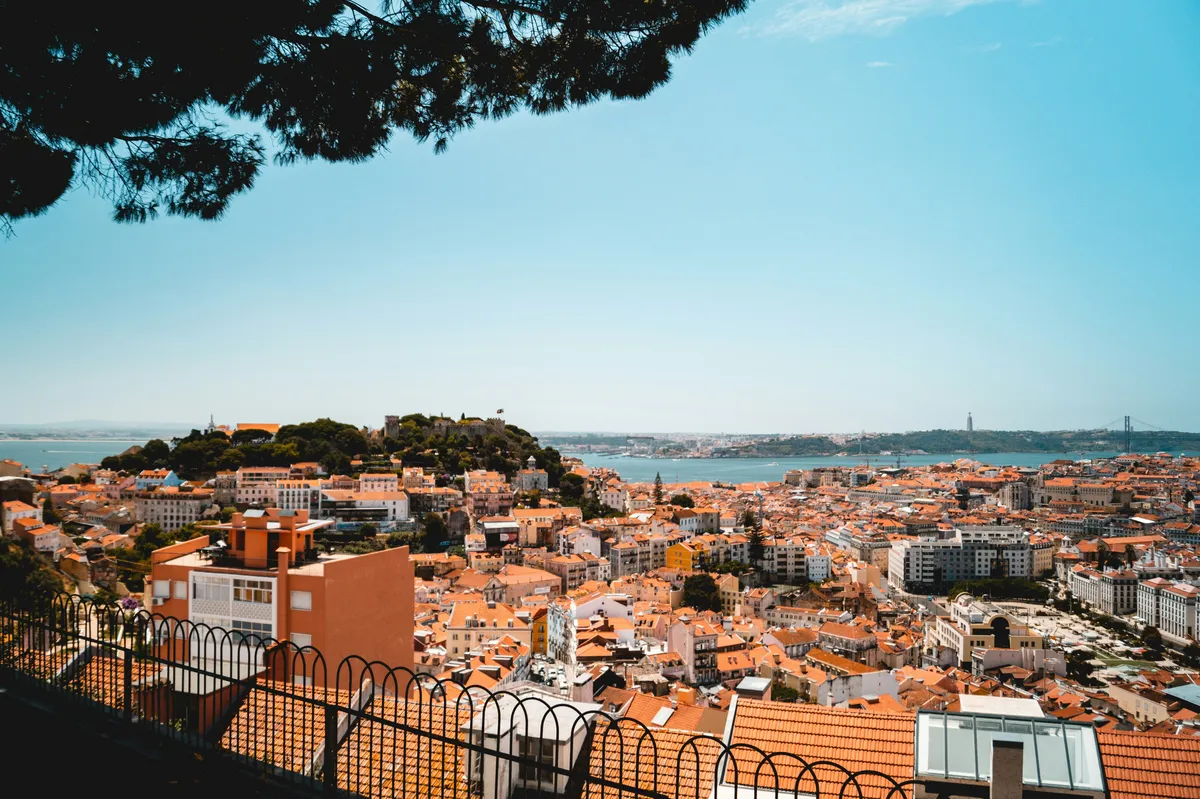
Lisbon's buildings and what they mean for air conditioning
Baixa and the historic quarters. Pombaline and older buildings, thick walls, high ceilings and decorative plaster. Main façades are tightly regulated, and in historic areas even more so. Outdoor units go in light wells, rear courtyards, on the roof or on a back balcony, never forced onto the street façade.
Late 19th and early 20th-century blocks (Avenidas Novas, Arroios, Campo de Ourique, Estrela). Large rooms and tall ceilings, which need more capacity per room than the floor area suggests. Internal light wells (saguões) are often the best place for outdoor units.
Mid-20th-century neighbourhoods (Alvalade, Areeiro, Olivais). More regular buildings, balconies and enclosed verandas that allow simpler solutions, with multi-split reducing the number of units.
Newer Lisbon (Parque das Nações, Telheiras). Many apartments already have air conditioning pre-installation and plant spaces planned. Here the job is mainly checking the pre-installation and fitting the units.
Municipal rules and each building's regulations set limits on equipment on façades. Before installing, we check with you where the unit can go. This is general information and does not replace confirmation with the competent authority or legal advice.
Old wiring
In many older Lisbon buildings, the electrical installation was designed for a few lights and a fridge. We find fuse boards with screw-in fuses, circuits shared across half the flat and sockets without earth. Before connecting air conditioning, a heat pump or a new water heater, we check the board and add a dedicated circuit. We're electricians too, so it's all sorted in one visit.
Holiday rentals in Lisbon
In the historic neighbourhoods, many flats are short-term rentals. Air conditioning and hot water weigh heavily in reviews. We service units before high season and size water heaters for a full house, and we work with owners in English.
Our services in Lisbon
Air conditioning. Installation with discreet splits, multi-split to save façade space, and ducted units in renovations with false ceilings. Maintenance before summer, twice a year for rentals. AC repair for every brand. Pre-installation during the full renovations so common in older buildings.
Heating and ventilation. Heat pumps, mainly for hot water. Central heating with radiators in occupied homes. Underfloor heating in full renovations. Horizontal and slim water heaters for small bathrooms. Electric boilers for flats without gas. Ventilation for windowless bathrooms and damp walls.
Electrical. Fuse board upgrades and dedicated circuits; EV chargers in building garages and houses.
A Lisbon job: café ventilation in Campo de Ourique
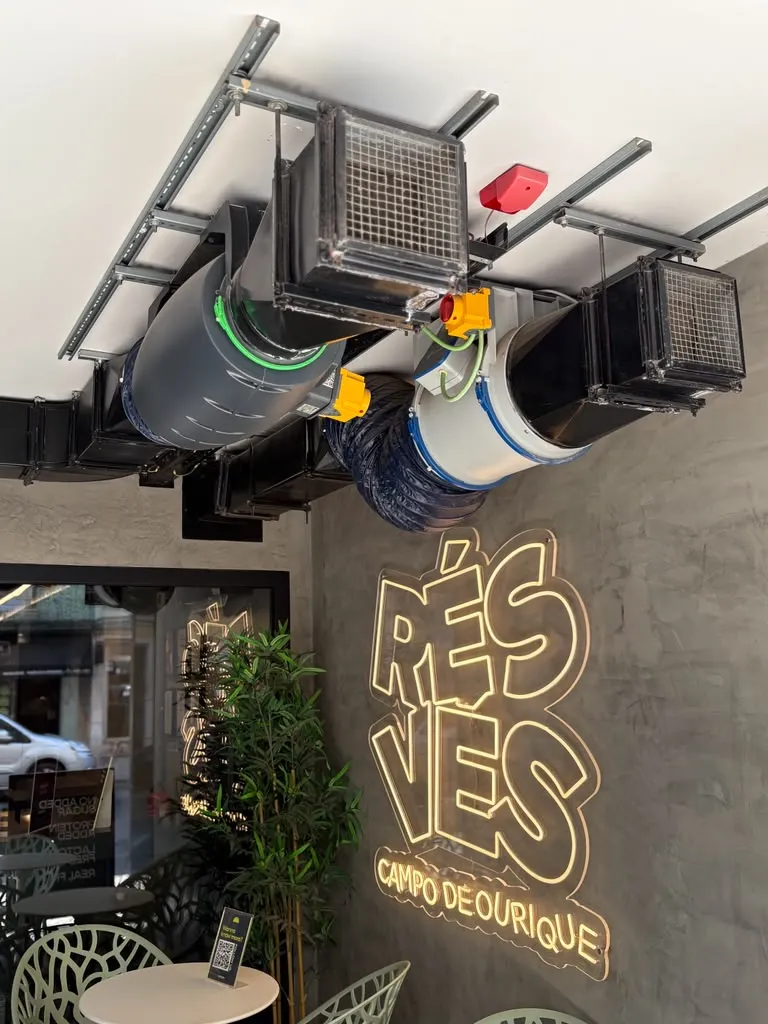
In a café in Campo de Ourique, we installed a mechanical ventilation system in the ceiling, with in-line duct fans and filter boxes left exposed as part of the décor. In a busy space with little natural airflow, ventilation makes the difference between pleasant and stuffy. See commercial.
Parishes we cover
Alvalade, Areeiro, Arroios, Avenidas Novas, Benfica, Campo de Ourique, Campolide, Estrela, Lumiar and Telheiras, Graça and São Vicente, Santa Maria Maior, Misericórdia, Santo António, Alcântara, Ajuda, Belém, Marvila, Beato, Olivais, Parque das Nações and Carnide.
Outside the city, see Greater Lisbon. Neighbouring areas: Oeiras, Amadora, Odivelas and Loures.
Frequently asked questions about Lisbon
It depends on the building rules, municipal regulations and whether the façade is in a protected area. Often the answer is the light well, the roof or a rear balcony. We assess it on the visit. This is general information and does not replace confirmation with the competent authority or legal advice.
Yes, but it needs its own circuit with proper protection first, which often means upgrading the board. We do both in the same job.
Yes. We plan the unit position and pipe route to avoid damaging plasterwork, and size capacity for the room's actual volume, not just its floor area.
Yes, from your landlord in writing, and the building rules still apply.
Yes, across the city's parishes.
Yes, where there is room: an enclosed laundry, a storeroom or a utility space with enough air, or a route for ducts to the outside. In small flats without that space, an electric water heater is still the practical choice. See heat pump vs water heater.
Often the cause is poor ventilation in a closed, older building. Depending on the flat, the answer is dehumidification or mechanical ventilation: see ventilation and dehumidification.