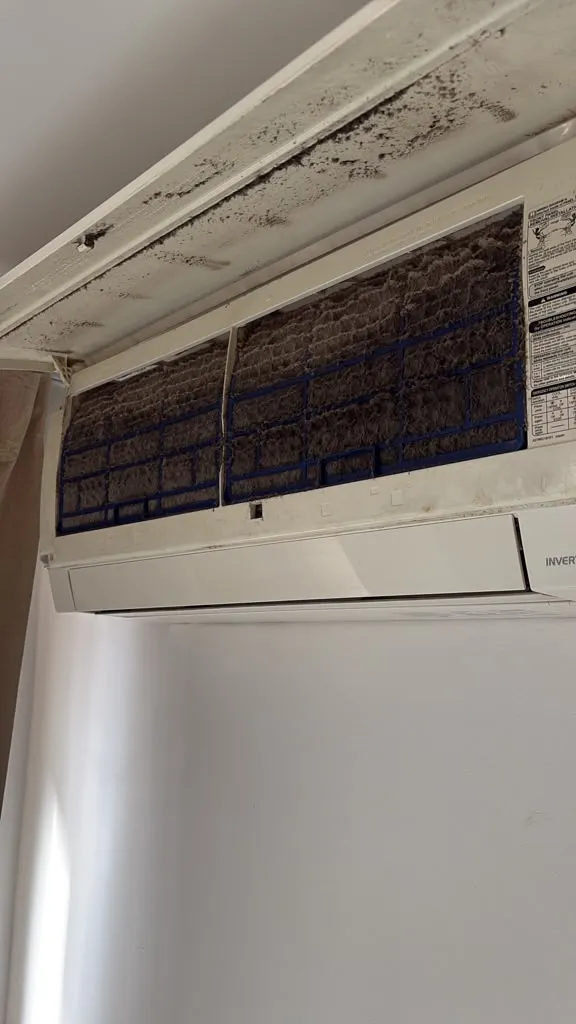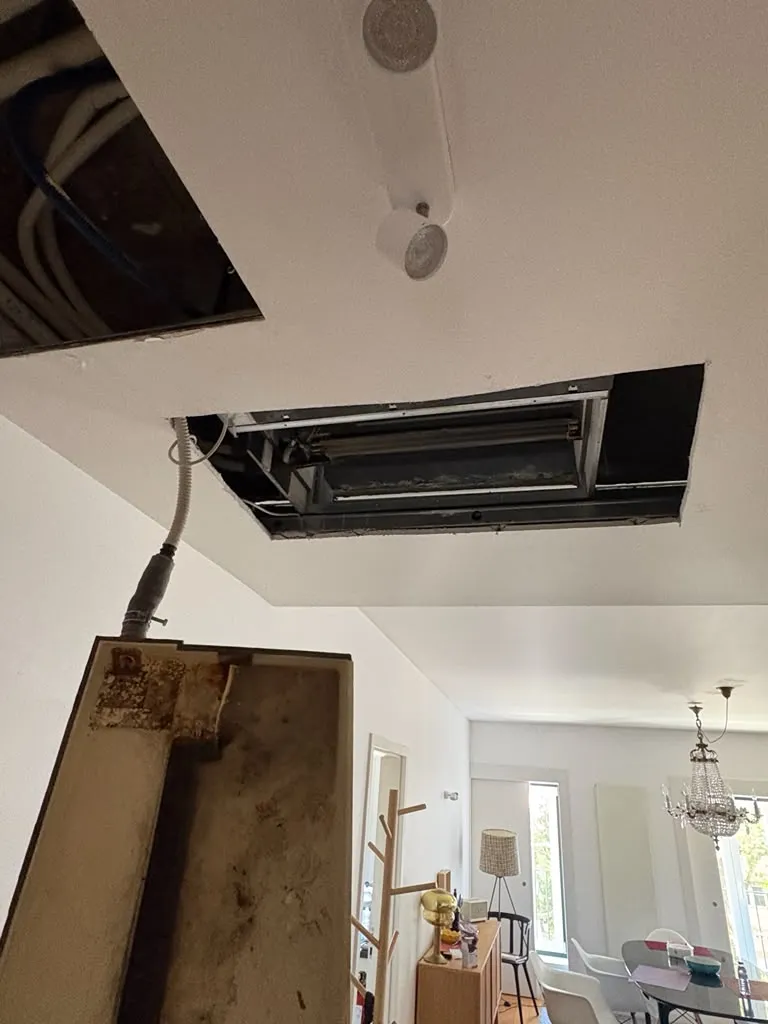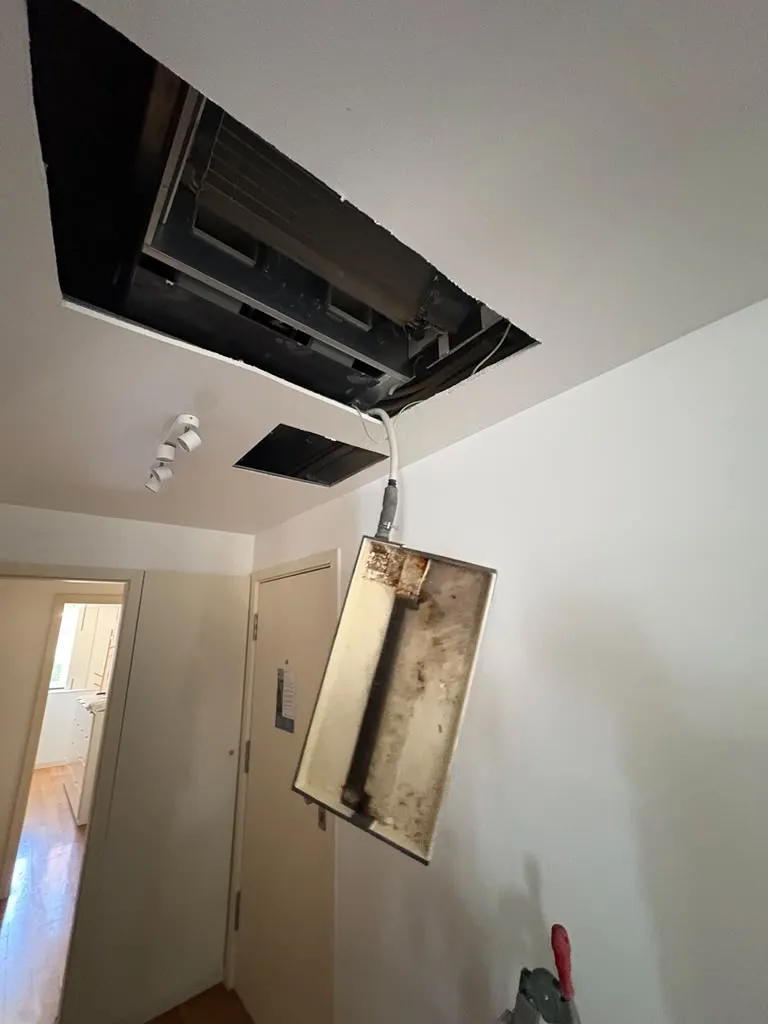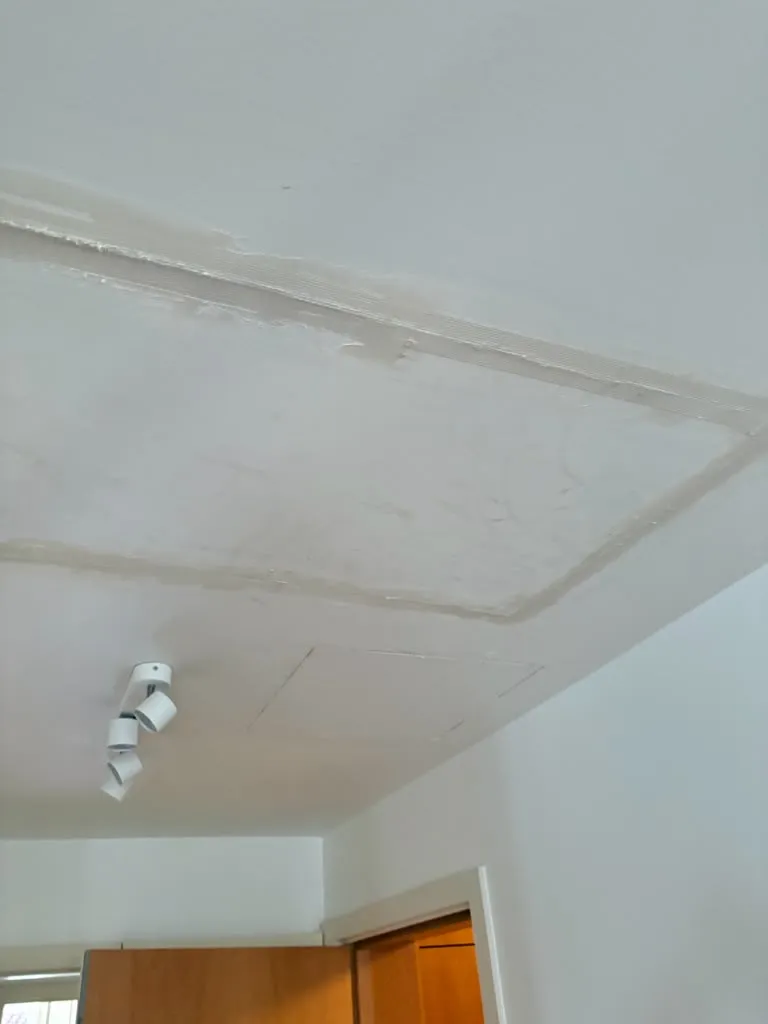
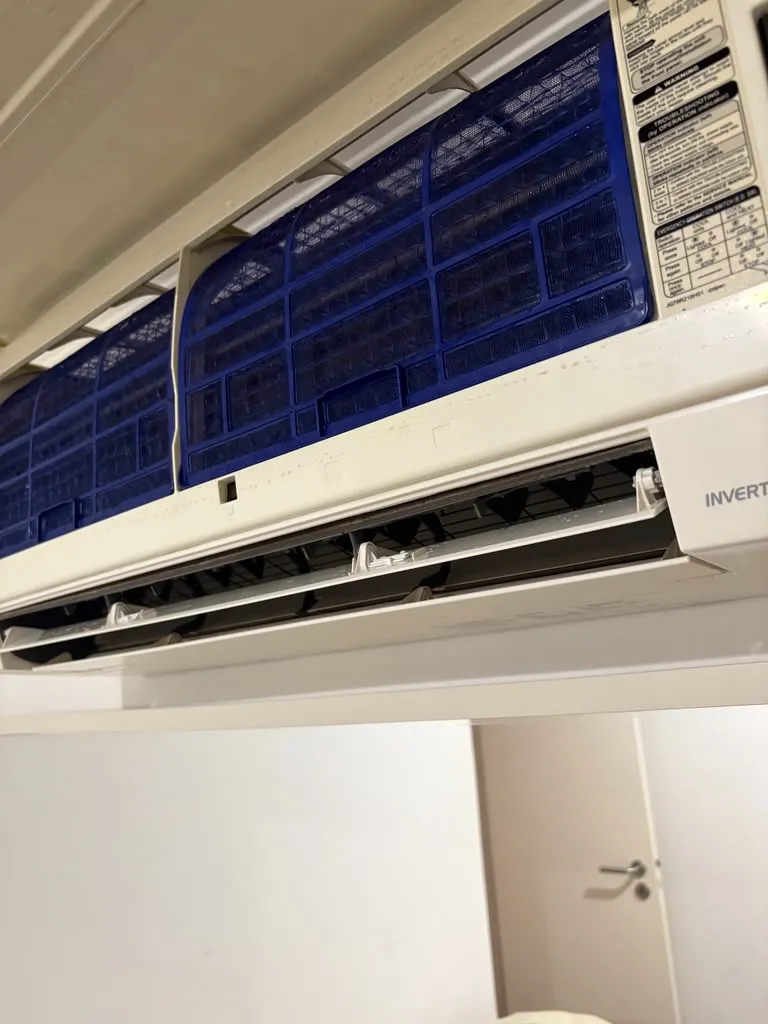
A dirty unit uses more electricity for less comfort, breaks down more often and blows whatever has built up inside straight into your rooms. Regular aircon cleaning prevents all of that.
What we do on every service visit
We follow the same checklist every time, so nothing is missed.
Indoor unit
- Clean and disinfect the filters, or replace them when they are past cleaning
- Clean the coil (heat exchanger) and the fan barrel
- Clean and disinfect the condensate tray
- Check the condensate drain so water flows out and doesn't drip
- Clean the outlet grilles and louvres
Outdoor unit
- Clean the coil fins (dust, leaves, pollution, salt near the coast)
- Check the fan and the mounts
- Inspect pipe connections and insulation
Performance
- Measure air temperatures in and out
- Check pressures and look for signs of refrigerant leaks
- Test in cooling and heating mode
- Check the electrical connections
At the end, we tell you what we found. If a part needs attention, we explain why and give you the price before doing anything. If everything is fine, we say so. We don't sell work you don't need.
Cleaning ducted air conditioning
Ducted units sit out of sight in the false ceiling, which is exactly why they get forgotten. Yet all the air in the house passes through them. Cleaning a ducted unit means:
- Opening the ceiling access hatch.
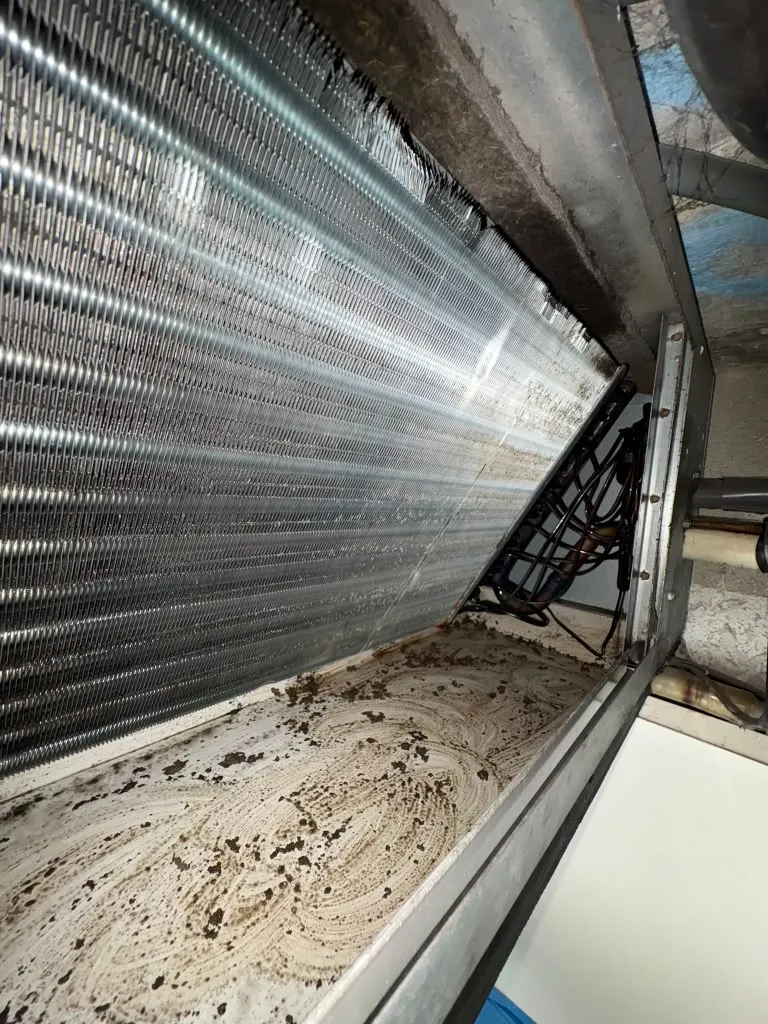
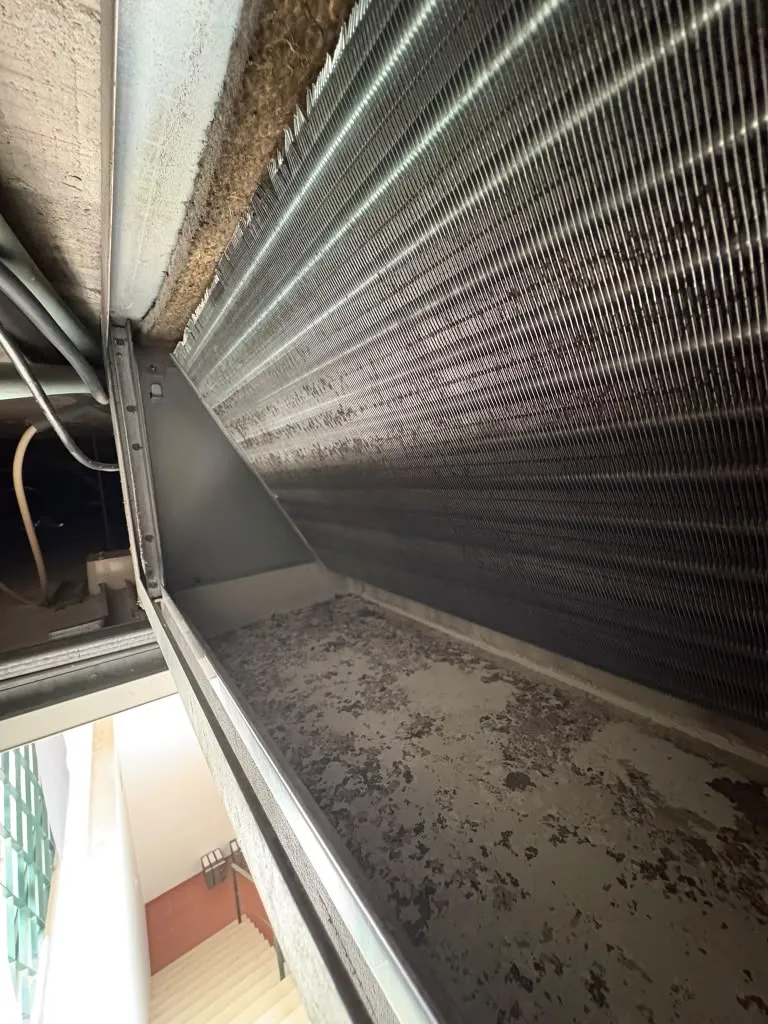
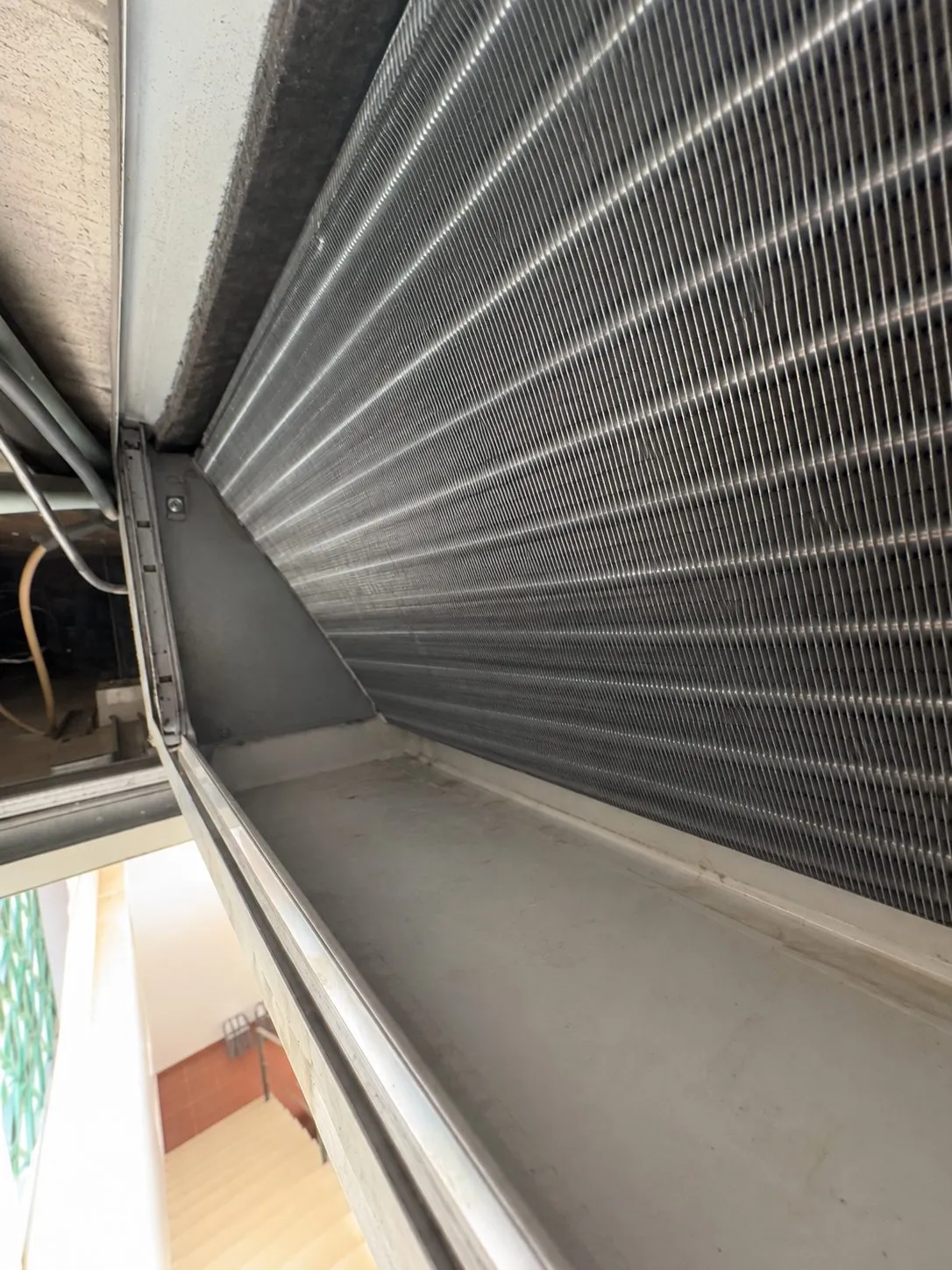
- Removing the condensate tray, where mould often builds up.
- Cleaning and disinfecting the coil and the tray.
- Reassembling, testing and closing the hatch.
Please note: this is cleaning of the air conditioning unit itself. We do not clean ventilation ductwork.
How often
| Use | Full service | Filters (you can do this yourself) |
|---|---|---|
| Home, seasonal use | Once a year, before summer | Every 2 months in season |
| Home, all-year heating and cooling | Once or twice a year | Monthly in season |
| Holiday rental | Twice a year, before high seasons | Between stays when possible |
| Shop, office, restaurant | Twice a year or more, depending on hours | Monthly |
Spring is the best time to service air conditioning: the unit is ready before the heat, and diaries are still flexible. If you rely on it for heating, a second visit in autumn makes sense.
Holiday rental owners
Guests notice smells, noise and drips straight away, and they mention them in reviews. A service before each high season keeps units clean and reliable. If you manage a rental from abroad, just tell us on WhatsApp who will let us in, and we'll arrange the visit around your bookings.
Cleaning the filters between services
- Switch the unit off, and ideally the breaker.
- Lift the front cover of the indoor unit and slide out the filters.
- Vacuum them or rinse them in lukewarm water, without harsh detergents.
- Let them dry in the shade and refit them.
Never run the unit without filters: the coil gets dirty much faster.
Businesses
In a shop or office, a unit failing on a hot day costs money. For businesses, buildings and rentals we plan maintenance outside your busiest hours, with one technician who knows your equipment. Systems holding larger amounts of refrigerant are also subject to periodic leak checks required by law, carried out by a certified technician. See businesses. This is general information and does not replace confirmation with the competent authority or legal advice.
Signs your unit needs attention now
- Musty smell when it starts
- Cools or heats less than it used to
- Water dripping from the indoor unit
- More noise than usual
- Ice on the pipes or the outdoor unit
- A higher electricity bill for no obvious reason
Some of these already point to a fault. In that case see AC repair or our guide to common air conditioner problems.
Before and after: what a clean makes visible
The photos on this page come from real jobs. On the dirty filters, dust has matted into a felt that blocks airflow; on the ducted unit, the condensate tray was covered in mould before cleaning and clear afterwards. That's the air every room in the house was breathing. A yearly service keeps it from ever getting to that point.
Frequently asked questions
Yes. We service every major brand regardless of who installed it: Daikin, LG, Samsung, Haier, Panasonic, Hisense, Toshiba, Mitsubishi Electric, Fujitsu, Gree, Midea and others.
Working isn't the same as working well. Dirt builds up gradually: the unit still switches on, but uses more power, cools less and spreads dust and microbes around the room.
It depends on the number of units and the type. A wall split is quick; a ducted unit takes longer because the ceiling hatch has to be opened. We tell you when we book.
Yes, we check pressures and look for leaks. If refrigerant is low, there is a leak: it gets found and repaired first, then recharged. Topping up without repairing means paying twice.
No. We clean air conditioning units, including ducted units hidden in false ceilings, but not ventilation ductwork.
Yes. In a home with a multi-split or several splits, we service all the indoor units and the outdoor unit on the same visit. Tell us how many units there are when you book, so we can plan the time.